
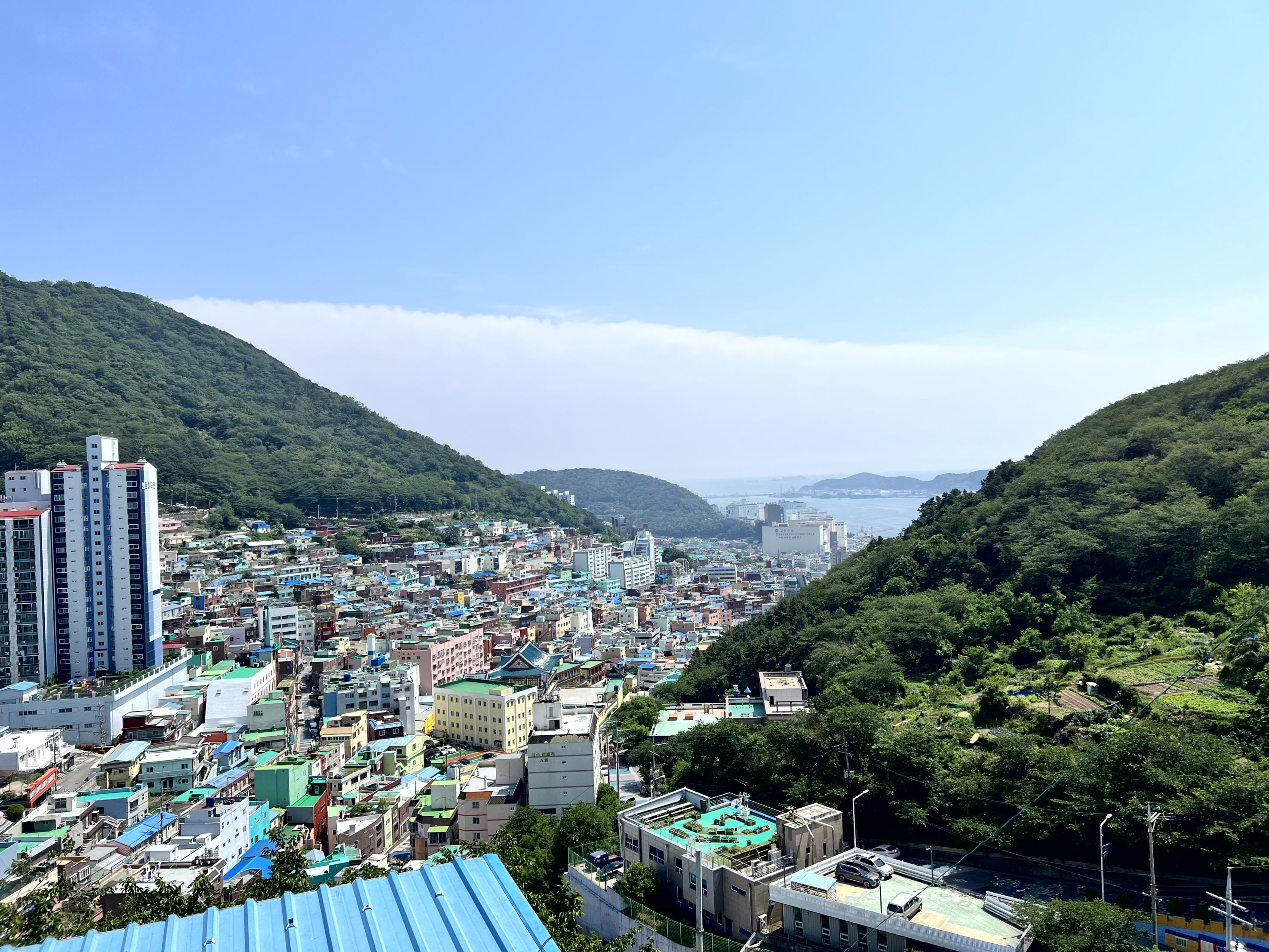
To be completely honest, visiting Busan, South Korea wasn’t even on my radar until I watched the 2016 zombie horror movie Train to Busan (if you haven’t watched it yet, you should). Now taking a bullet train from Seoul to Busan is on my bucket list! South Korea’s second largest city is famous for its beaches, natural beauty, fresh seafood, and cultural attractions. It’s also home to the country’s largest port, making it a major foreign trade hub.
This is the fourth installment of my Traveling Vicariously series, taking a look at how my mom spent 18 days in South Korea. I’ve added additional sightseeing and hotel ideas that I’m thinking about adding to my own trip itinerary in the future! Interested in visiting other cities during your trip? Check out the rest of my South Korea posts!
Busan Attractions
Ahopsan Forest
Located at the base of the Ahopsan Mountain, the Ahopsan Forest is a peaceful natural habitat full of bamboo, cypress, cedar, and ginko trees. The forest covers nearly 128 acres and has about 2 miles of hiking trails to explore. It had been privately owned and maintained for over 400 years before being opened to the public in 2016! It’s become a popular filming location for many K-dramas and films, drawing even more visitors. Some famous titles include Kundo: Age of the Rampant and The King: Eternal Monarch.
While technically still part of Busan, it’s a bit of a trek from the city center. The drive from downtown Busan takes about 20 – 30 minutes and there is free parking at the entrance to the forest. Public transportation on the other hand takes closer to an hour. You’ll take the Metro Line 1 (Orange Line) to Nopo Station and transfer to the Gijang-gun 2-3 bus, which you’ll exit at the Midong Village stop. Tickets can be purchased at the entrance to the forest for ₩8,000 or about $5.50 (as of 2025).


Haedong Yonggungsa Temple
This seaside Buddhist temple is one of only three Sacred Places dedicated to the Great Goddess Buddha – Tara. Buddhist temples in South Korea tend to be built in the mountains, so the Haedong Yonggungsa Temple being situated along the coast makes it pretty unique! There are 108 stairs down to the main temple area, a significant number in Buddhism. It represents the 108 limitations/imperfections that humans possess and must overcome in order to achieve enlightenment.
It’s especially popular to visit the temple during the Buddha’s Birthday celebrations and in the springtime when cherry blossoms are in bloom. Looking to avoid the crowds and take in the views in peace? The temple opens at 4am every day so visitors can view the sunrise from the sunrise platform. A number of bus lines (1001, 181, 100, and 139) will get you from downtown Busan to the temple in around 30 minutes.


Haeundae Blueline Park
First opened to the public in 2020, the Haeundae Blueline Park is one of the newer attractions in Busan. This formerly abandoned railway line was repurposed into a wildly popular sightseeing trolley. The park consists of the Beach Train, Sky Capsule, and Haewol Skywalk. Its route is close to 3 miles long and runs between Mipo Station and Songjeong Station. The trolleys run 3 times an hour and the ride takes about 25 minutes one-way. Don’t want to be on the train for that long? No worries, there are 5 other stations you can get on or off at!
It’s highly recommended to make a reservation online in advance as slots fill up quickly. This is especially true during the peak tourist season (May – September). Reservations open 4 weeks in advance. There are a few different ticket options to choose from: one way, round trip, or package deals which include both trains.


Gamcheon Culture Village
While the Gamcheon Culture Village of today is known for its colorful houses, art installations, shops and cafes, the history of the area isn’t quite as bright. It started as a village for port laborers in the 1920s-30s, then Korean War refugees settled there in the 1950s. So for the several decades, the area was known for its poor living conditions and poverty. In 2009, the Ministry of Culture, Sports, and Tourism began a renovation effort which transformed the village into what it is today.
One of the best ways to explore the village is to take advantage of the stamp map tour. There are 12 stamps and 2 postcards to collect along the trail, giving you a unique souvenir to take home. Maps can be purchased at the Information Center. There is also a traditional hanbok rental program, similar to Gyeongbokgung Palace in Seoul.


Haeundae Beach
Attracting millions of visitors every year, Haeundae Beach is considered to be one of the most popular beaches in all of South Korea. During the busy summer months you’ll see the mile long white sand beach lined with hundreds (if not thousands) of umbrellas! While there’s not much to do on the beach itself besides swim and sunbathe, the surrounding area is very touristy with lots of shops and food options. Every year in mid-late May the city holds the Haeundae Sand Festival. The giant sculptures have a different theme every year and stay on display through the first week of June!
Now don’t worry if the crowds at Haeundae Beach aren’t your cup of tea. There are actually 6 other public beaches to choose from in Busan: Imnang, Ilgwang, Songjeong, Gwangalli, Songdo, and Dadaepo.


Additional Ideas
- BIFF Square – this district promoting the Korean film industry is home to movie theaters, souvenir shops, and street food vendors.
- Busan Tower – a nearly 400ft tall observation tower in the middle of Yongdusan Park with panoramic city views.
- Okryeonseonwon Temple – this Buddhist temple near Gwangalli beach tends to be less crowded than the Haedong Yonggungsa Temple.
- Jeonpo Cafe Street – a hub for specialty coffee shops, bakeries, cute cafes, and restaurants.
- Shinsegae Centum City – the world’s largest department store (3.16 million square feet).
Where to Stay
First time visitors to Busan, South Korea are often recommended to stay in Haeundae because of the popularity of the beach, but it’s not centrally located. Seomyeon, Nampo, and Gwangalli are popular neighborhoods as well. Some of the top attractions in each area include:
- Haeundae – Blueline Park, Haeundae Market, SEA LIFE Aquarium, and Haeundae Beach.
- Seomyeon – Seomyon Market, Jeonpo Cafe Street, and the Underground Shopping Center.
- Nampo – Busan Tower, Gwangbok-ro Fashion Street, Gukje Market, and BIFF Square.
- Gwangalli – Gwangan Bridge, Millac Market, Okryeonseonwon Temple, and Gwangalli Beach.
Hotel Spotlight: L7 Haeundae by Lotte
As you’ll likely guess from the name, the L7 Haeundae is located within walking distance of Haeundae beach and has great views of the ocean – especially from the rooftop pool! The rooms are clean, modern, and decently sized for the price. Along with the pool, you’ll also find a daily breakfast buffet, gym, cafe, and even a 7-11 connected to the lobby if you forgot something or need a snack! The hotel’s location gives you easy access to Haeundae’s shopping, restaurants, and entertainment.


Additional Hotels to Consider
tt hotel – Seomyeon – 35 Saessak-ro, Busanjin District, Busan.
This more budget-friendly hotel option is conveniently located near both Bujeon and Seomyeon stations, making it super easy to get around the city.
Aventree Hotel – Nampo – 6 Gwangbok-ro 39beon-gil, Jung-gu, Busan.
Popular with visitors looking to be in the heart of Old Busan – great location for shopping, sightseeing, and dining options.
H Avenue Hotel Gwangalli – Gwangalli – 29 Millaksubyeon-ro, Suyeong-gu, Busan.
The perfect hotel for those looking for direct beachfront access and relaxing ocean views.
Day Trips from Busan
Highlight: Gyeongju
This coastal city is the former capital of the Silla Dynasty, Korea’s longest-reigning dynasty (57 BC – 935 AD). Thanks to its historical importance, Gyeongju is home to a number of UNESCO World Heritage sites. This makes it a popular day trip destination for history buffs! While you can get there on your own, it’s only 2 stops away from Busan Station, visiting with a tour group is recommended as all of the sites aren’t super convenient to get to. There are two main ways to get there: a high speed train which takes about 30 minutes, or a tour bus which is closer to an hour – hour and a half.
There are a number of different tour options to choose from, all with slightly different itineraries depending on what you’re interested in! I’d recommend the A-1 package from this Klook tour, which includes stops at Bulguksa Temple, Yangdong Folk Village, Daereungwon & Hwangnidan Street, Woljeong Bridge, Donggung Palace and Wolji Pond.


Additional Ideas
- Geoje Island – the second largest island in South Korea is known for it’s scenic seaside views, Oedo Botania Island, and the Windy Hill. Located 1.5 to 2 hours from Busan by train or bus.
- Daegu – the third largest urban area in South Korea. Located 1 to 1.5 hours from Busan by high speed train.
What are your favorite things to do in Busan, South Korea? Let me know in the comments!
Leave a Reply