

SGT Guest Contributor: Jasper
– Electrical Engineer, Train Enthusiast, and Short Girl Travel Companion
Allison has always had a knack for finding the best food and drinks wherever we have lived or traveled. However, when it comes to figuring out how we are going to be moving between cities during our adventures, I always prefer to take the lead. Now this is less about the career path I have chosen and more about my life-long passion for trains and train travel. Through trial and error, I have gathered a few useful train travel tips over the years. Our train travels have been limited to the US and a few European countries so far, but we hope to expand our experience to other regions in the near future.
Before we get into the nitty gritty of my train travel tips and information, I feel its important to give some backstory to my train “obsession”.
My Love For Trains
For as long as we’ve been together, Allison has known that I have a love for trains and train travel. This generally is thanks to the endless amount of train knowledge I have hit her with over the years. Whenever we’re out and see a train, she hits me with an “I LiKe TrAiNs” in a mocking/playful tone. An ode to the “I like turtles” kid that made the rounds on YouTube.
I have loved trains and everything about them for as long as I can remember. There are a few instances I can pinpoint that might be where I got my start. When I was around 5, my family moved into a centuries old home bordered by a small-town freight railroad. I’d spend hours walking along the tracks, taking any chance to watch the small freight trains pass by. Spending time with my family on the Strasbourg Railroad is another core memory. This historic steam railroad was a standard trip my grandparents loved to take us on. While it is only 9 miles round trip, experiencing a coal powered steam locomotive pulling you along shouldn’t be missed for any rail lover.

Finally, when I got a bit older, my grandparents took me on my first real train trip – with Amtrak. We traveled from Lancaster to Philadelphia, and then hopped on another train down to Colonial Williamsburg in Virginia. Now-a-days this love has extended to my daily life – both at work and home. During the day, I work in the train transportation industry. Then I enjoy spending my evenings scrolling YouTube for various train related content. My favorite content includes train cab rides, the history of rail travel in a specific country, and reviews of different routes. I can spend hours watching trains move throughout the world.
Pre-Trip Research
The idea of getting to do something as memorable as yearly international travel used to seem out of reach. But now that I’m an adult with adult money, it has finally become a reality. This offers a wave of excitement in getting to experience a new country and culture. Once that initial wave of excitement subsides, the reality of having to actually plan the finer details of the trip start to mount.
Since the majority of our foreign travel occurs in Europe (for now), traveling between cities via train is usually the best option. Unlike the United States, most European countries have a vast array of different train companies. These range from government supported rail, usually with a few different types/versions of trains, to privately owned companies. Figuring out the best option takes a fair amount of research, some intuition and even a small amount of luck.
The first of my train travel tips is an easy one: start your research process with Google Maps. It is a very good resource for figuring out how long it will take to get from city to city. This gives us an idea of when we will depart from and arrive in each city. Knowing our travel schedule, gives us a basis for how much time we have to schedule activities in each city.
While I start my research off with Google Maps, it is important to remember that it isn’t perfect. This cropped up when Allison traveled to Greece. She discovered there wasn’t signage for the M3 metro line that Google said to take from the airport into Athens. At the station everything said Suburban Train instead. This caused a bit of confusion and took some extra time to figure out which train she needed to take.

Once I have an idea of when we want to be traveling between cities, I move onto the next step. Where possible, book on the railways website directly (ex. Italo – Italian private rail operator, Deutsche Bahn – German State Railway, SNCF – French State Railway, etc). Not only will this give you usually the best prices, but you are generally going to get the best information.
Rail Network Maps
“Train nerd” is Allison’s favorite thing to call me when I start looking at rail network maps. Typically, this is just for my own enjoyment. But when we are planning our adventures, it becomes very important and the subject of another of my train travel tips: try to find places to stay near stations or train lines.
Google again is very good place to start, as generally it has the most up to date information. When you use the public transport overlay of Google Maps you are able to see the individual train/metro lines. This allows you to see where they go, where they stop, and how often they stop there. Choosing a hotel along a train line, combined with a good idea of your daily activities, is a great way to reduce the amount of walking you end up doing.
Now if you are a train nerd like me and interested in more in depth information, there is another option. Open Railway Map is an open source web-based map that is based on the Open Street Map website. There are overlays that show information about infrastructure (main vs branch lines, bridges, sidings), max speeds, signaling and train protection, electrification, and track gauge (how wide the rails are spaced apart).
Types of Rail Travel
During your pre-trip research, you will likely notice that there are three major types of trains/rail travel available to you. The following is a quick overview of those types and how they typically interact with the city and its surroundings.
One of the things that the US and the EU seem to have in common in terms of rail infrastructure are the types of rail lines available. Frequent train travelers know that there are 3 basic rail types: Metro/Subway, Regional Rail, and High-speed rail. Major cities generally have some combination of the three types available.
A good example would be our current home city of Philadelphia. Philly offers a subway, robust Regional Rail network, and connections to every Amtrak train running along the North East Corridor. Many cities across Europe also offer perfect examples of this layout. Frankfurt, Germany has the expansive U-Bahn and S-Bahn services and plenty of high-speed rail options to the rest of Germany and Western Europe. Paris, France has not only the Eurostar connection to Great Britain, France, and Belgium, but also an expansive metro service.
Metros & Subways
The first and what some consider to be the most important rail type: Metros and Subways. This is a frequent intra-city service with reasonably cheap pricing generally located in the larger American and European cities. Some prominent examples include the Milan Metro in Italy, the MTA in New York City, and the U-Bahn in Germany.
Regional Rail
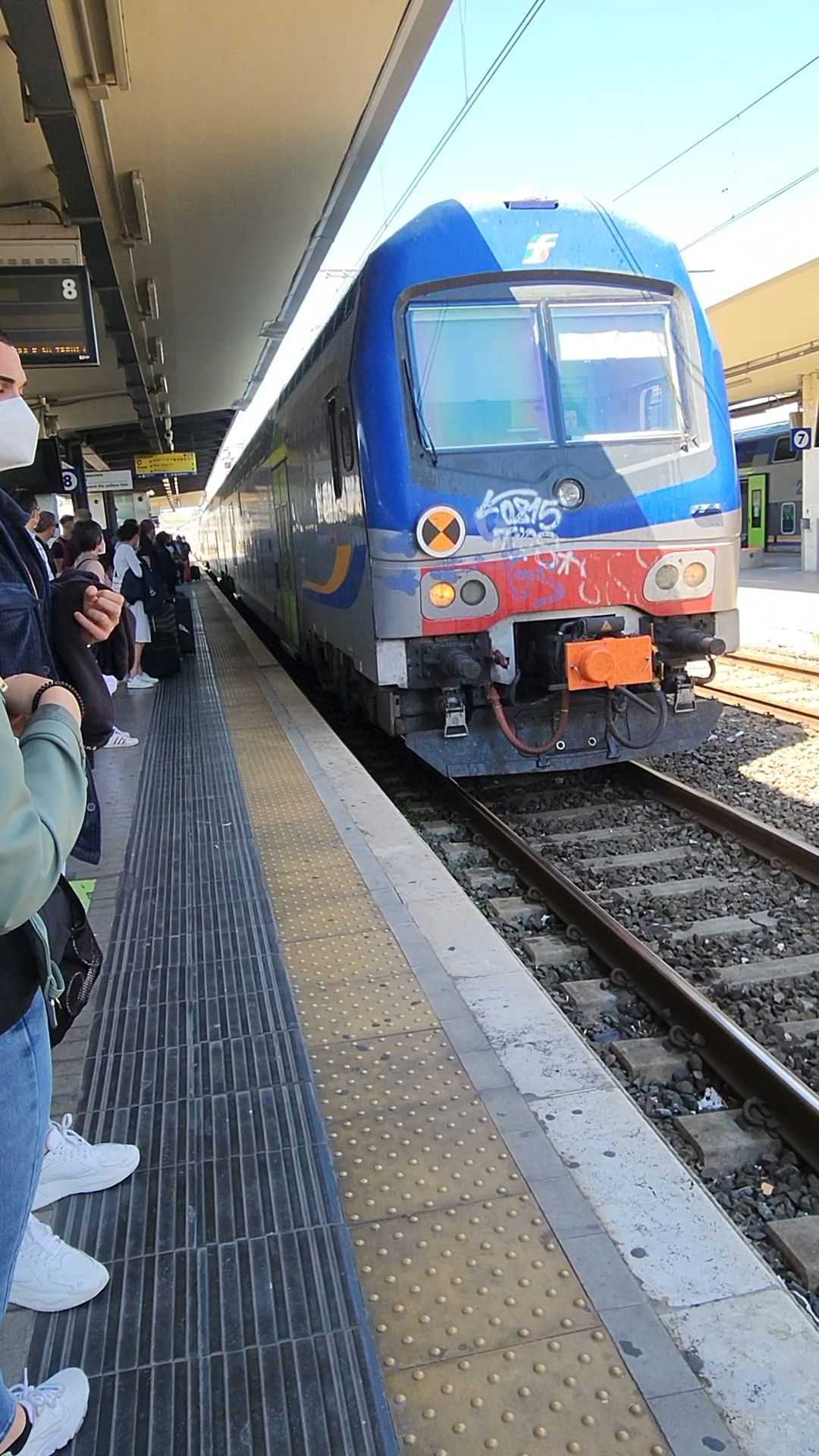
The next type, which is also widely viewed as important, is Regional Rail. These services are a bit faster than Metros/Subways, but also a bit less frequent. Most Regional Rail offers connections to the surrounding suburban areas and are typically considered commuter trains. Examples include the Transport Express Regional in France, Regionale in Italy, and Long Island Rail Road in New York City.
Long Distance/High-Speed Rail
Finally, what I personally consider the crème de la crème of rail/train service: long-distance/high-speed rail. Here you’ll find the fastest trains in the world, but they don’t run very often compared to the other types. Almost all rail companies operating these services offset the low frequency by running trainsets that can carry 400-900 people. These generally serve larger cities and run with minimal stops between them. This allows them to provide quick connections between major population centers. Some of my personal favorite high-speed rails are the ICE (Intercity Express) in Germany, Frecciarossa in Italy, and AVE (Alta Velocidad Española) in Spain.
While technically the North East Corridor (NEC) has the Amtrak Acela, myself and the rest of the railway world does not consider this true high-speed rail. It has a top speed of 125mph on the upgraded portions and topping out at 150mph on the dedicated sections. For the upgraded sections this just cracks unofficial minimum speed and dedicated sections just miss the mark for high-speed rail.


Tickets
Buying anything nowadays can be stressful, especially while trying to find the best price and service. One of my biggest train travel tips is to buy your tickets directly from the rail company you plan on using. I have found that if you sign up to be a member of the railway, you are always going to get the best pricing.
By going through the railway directly, a small amount of luck can even come into play. When we were booking our train travel in Italy, we actually found that Italo had a trip from Venice to Milan in their Executive Class (First Class) for about the same price as Business Class. I suspect this was to fill out the Executive Class seats as much as possible. For it being the longest leg of our trip, we were very thankful to have the best seats available. If we had been using a third-party to book these tickets we may not have ever found this deal!
Most advice you will get about when to book tickets will say at a minimum two weeks in advance. I have found that works in shoulder seasons, but in the peak of the summer this probably won’t fly. Generally when I book tickets, I try to book them as far out as a I can. Most companies/countries allow you to buy them up to 3 months in advance. Even during the peak travel times, this will give you plenty of options.
Some of the railways in Europe are not as punctual as others (granted, everywhere is better than the US) and the company websites will have a better understanding of this. This will allow them to show you where a connection might be really tight or give you on time performance so you can decide if that 5 min connection time is worth the risk. Additionally, while Google may show a non-stop trip between two cities, the actual company may not be running that service or the tickets might be at a significant markup compared to a multi-connection stop or a slower train.


Luggage
Whether you fly internationally or domestically, one of the things people worry about the most is their luggage. Did I pack enough? Do I have too much? How much is this going to cost? What can I bring with me? This is one of the biggest reasons I prefer taking the train over flying, because I generally don’t have to worry about any of these things.
Most trains across Europe and the United States do not have strict limits on luggage. For the few that do, the limits generally are well above what a single person would need for normal trip. Typically, you will see limits on the order of two bags per person, plus a piece of hand luggage (backpack, purse, etc.) allowed on your person. Additionally, as long as your bag fits on the rack and isn’t in the way, its likely no-one will complain about the size. To top it all off, you will rarely run into a situation where you have to pay for your luggage to be on the train.
Every long distance or high-speed train that I have been on had dedicated locations for luggage. Usually they will have a section at the end of each car where people can place their larger full size suitcases. Then most seats have storage above them for smaller carry-on size suitcases and back packs. Even though stolen luggage is rarely a concern, you will find people who insist on keeping all of their luggage with them at their seats even though it is in the way.
Railway-Related Channels I Follow
For any fellow train nerds, I wanted to showcase a few of the YouTubers that I follow closely. These channels not only keep my love of trains alive, but also provide some great train travel tips.
Starting us off is Simply Railway, one of the best channels for a Point of View (POV) account of various routes throughout the world. The channel is run by Thibault, who lives in France and used to work for a few different train manufacturers in the US and Europe. His channel has nearly 400 videos, all taken from his POV that cover a wide variety of countries, trains, routes, and experiences. While his accent is quite thick, 99% of his videos have text overlays that explain what is being shown on the screen so there is rarely an issue with understanding the video.
Next up is RM Transit, the best channel I’ve found for understanding all of the available public rail transportation. This channel is run by a guy named Reece from Toronto, Canada, who is a self styled urbanist and public transportation critic. His videos range from general critiques on specific routes, to detailed overviews of train systems in most major cities across Europe, Asia, and starting to expand into Latin American and Oceania.
Finally, for the really ultra nerdy of us there is Railways Explained. This is one of the few channels that is run by more than one person – its three guys who met as college roommates and now each hold professions in various rail related industries. They focus mostly on the full history of train travel in various countries across Europe and Asia. This channel is great for someone who wants to learn everything from the beginning of rail travel in a country all the way through to what the future holds.
My Top Train Travel Tips
I have covered a lot of information in the above sections. So below I am going to summarize my best tips.
- Google is your friend, and the best place to research how to travel between and within each city.
- Purchase tickets from the individual train companies when possible, not third party websites.
- Do your research: know what train travel in the country your visiting is like and who the major players are.
- Don’t worry about how much luggage you are bringing or about it being stolen out of the racks. You will make everyone happier by keeping your full-size suitcase out of the isle.
Have any good train travel tips/tricks? Let us know in the comments!
Leave a Reply